
The category we built

Your org chart is a design problem, not a hiring problem.

Team Architecture is the discipline of designing every seat in a business before you put a person in it — one owner, one outcome, one scoreboard. Then deploying the people and staying on the build.

90 min
Live session
5 stages
Growth model
4 layers
Structure model
0 politics
Structural analysis only
Team Architecture session
The science behind it

Three findings that make structure predictable.

Team Architecture isn't intuition about people. It's a structural read of a business — and structure behaves consistently enough to diagnose, model, and design against.

01 · Performance follows role clarity, not effort
When one seat carries two outcomes, both underperform — regardless of who's in it. Most "bad hires" are undefined roles with a person attached.
02 · Every business has a Bandwidth Gap
The distance between the work the business now generates and the capacity designed to absorb it. The gap always lands on whoever is least protected — usually the founder.
03 · Growth breaks structure at predictable points
Teams stall at the same five transitions. Knowing which one you're in tells you which seat to design next — before the breakdown, not after.
The five stages · click a stage
Stage 2 of 5 · Owner-Dependent
You have helpers, not owners.

People are hired, but no one owns an outcome. Tasks get delegated and judgment doesn't, so the founder is still the glue between every function. This is where most service businesses stall between $1M and $3M — and where hiring another doer makes the ceiling lower, not higher.

Tell-tale symptom
Everyone is busy and nothing has a scoreboard.
Next transition
The Trust Fall
Design the next seat
Ops Manager or Chief of Staff

The first seat that holds accountability without you in the room. Until it exists, every new hire adds coordination load to the founder.

Map my stage
The org structure model

Four layers. Every seat belongs to exactly one.

Leadership first — it's what buys back the founder. Then revenue, retention, back-office, and growth. Click any seat to see what it owns and when to design it.

Layer 01 · Ownership
YOU · CEO
Vision & growth only
Layer 02 · Leadership
Chief of Staff
Manage the CEO
Ops Manager
Operationalize the vision
Layer 03 · Functions
Revenue generating
Marketing · Sales
Revenue retention
CS · Onboarding
Ops & back-office
Finance · HR · Admin
Growth
Systems · Tech
Layer 04 · Multipliers
AI agents & automation
Attached to a seat — never a seat of their own
✓ One owner, one outcome, one scoreboard per seat.
Seat detail
YOU · CEO
Layer 01 · Ownership
Sets direction, capital allocation, and the next-level target.
Stops being the glue between every function.
Reviews scoreboards — not tasks.
Design this seat when
Always. The design starts by defining what the founder should stop doing.
The blueprint

The anatomy of an architected team.

Every Built to Scale™ team is designed in the same order — leadership first, then the layers that create, keep, protect, and compound revenue. Not an org chart of names. A structure of outcomes. Here's what each layer owns.

You · CEO Vision & Growth only. The whole point of the architecture below is to give this seat its time back. Every layer exists so the CEO can stop operating and start scaling.

The layer that lets the CEO step back — someone manages the CEO's priorities, someone operationalizes the vision. Design this first, or every other layer routes back to you.

One owner for demand, one for conversion — never a blended "marketing person who also sells". Pipeline targets tie directly to the next revenue level, so growth stops depending on the founder personally selling.

Owns the first 90 days of every client and solves fast, because churn is a structure problem before it is a service problem. This layer also feeds delivery real signal about what keeps clients.

Payroll, compliance, and the reporting rhythm. When this layer is missing, reporting is late and decisions get made on stale numbers — and the founder ends up back in admin.

Owns the tooling, the automations, and internal projects end to end. Without it, every improvement waits for someone to find spare time — and one-off fixes never become permanent systems.

Every seat has one owner and one outcome. No unicorn roles, no blurred lines — that's the difference between a team that scales and a team that just gets bigger.

See where your team has gaps
The CoWorq Method

Diagnose. Design. Deploy. Operate.

Consultants stop after the design. Staffing firms start after it. Team Architecture runs the whole loop — and the fourth phase is the one that makes the first three hold.

/Diagnose01
Map what exists
We chart the current structure, find the Bandwidth Gap, and locate your stage. No people politics — pure structural analysis.
Output: current-state org chart, gap analysis, stage read
/Design02
Architect every role
Built to Scale™ applied layer by layer: leadership first, then revenue, retention, back-office, growth. No unicorn roles.
Output: target org chart, seat definitions, scorecards, hiring order
/Deploy03
Fill the seats in order
We source, vet, and deploy CoWorqers™ into designed roles — full-time, US hours — and attach AI agents where volume is repetitive.
Output: filled seats, onboarding plans, first-90-day targets
/CoWorq OS04
Stay on the build
Monthly performance management, quarterly team reviews, biannual architecture reassessment as the target moves.
Output: operating rhythm, versioned architecture
The entry product

The Team Architecture Session.

Ninety minutes with a team architect. You bring the next-level target; we leave you with the structure that reaches it and the order to build it in.

What you walk away with
Before & after org chart
Your structure as it is today, next to the one your target requires.
Your stage & Bandwidth Gap
Where you are in the five stages, and exactly where capacity is missing.
Seat definitions & scorecards
One owner, one outcome, and the measures for every seat in the design.
Hiring order & budget
Which seat to fill first, what it costs, and what it unlocks next.
The design is yours whether or not you hire through us. Plenty of clients build it with people they already have.
Team Architecture Session
$1,249 one-time
90 minutes · live · with a CoWorq team architect
✓ Full structural diagnosis
✓ Target org chart & seat design
✓ Hiring roadmap with costs
✓ Deployment options, no obligation
Book the session
Only need one seat filled? That's Hire with CoWorq — a $749 Seat Design Call.
Khryzza explains Team Architecture

In her words: why it's never a people problem.

Ten minutes on the whole idea — what Team Architecture is, why accidental teams stall, and what changes the moment every seat has one owner and one outcome.

What she covers
— Why the "bad hire" is usually a bad role
— The Bandwidth Gap, in plain terms
— Why leadership gets designed first
— What "one owner, one outcome" changes
We don't place workers. We build teams — and we do it alongside you.
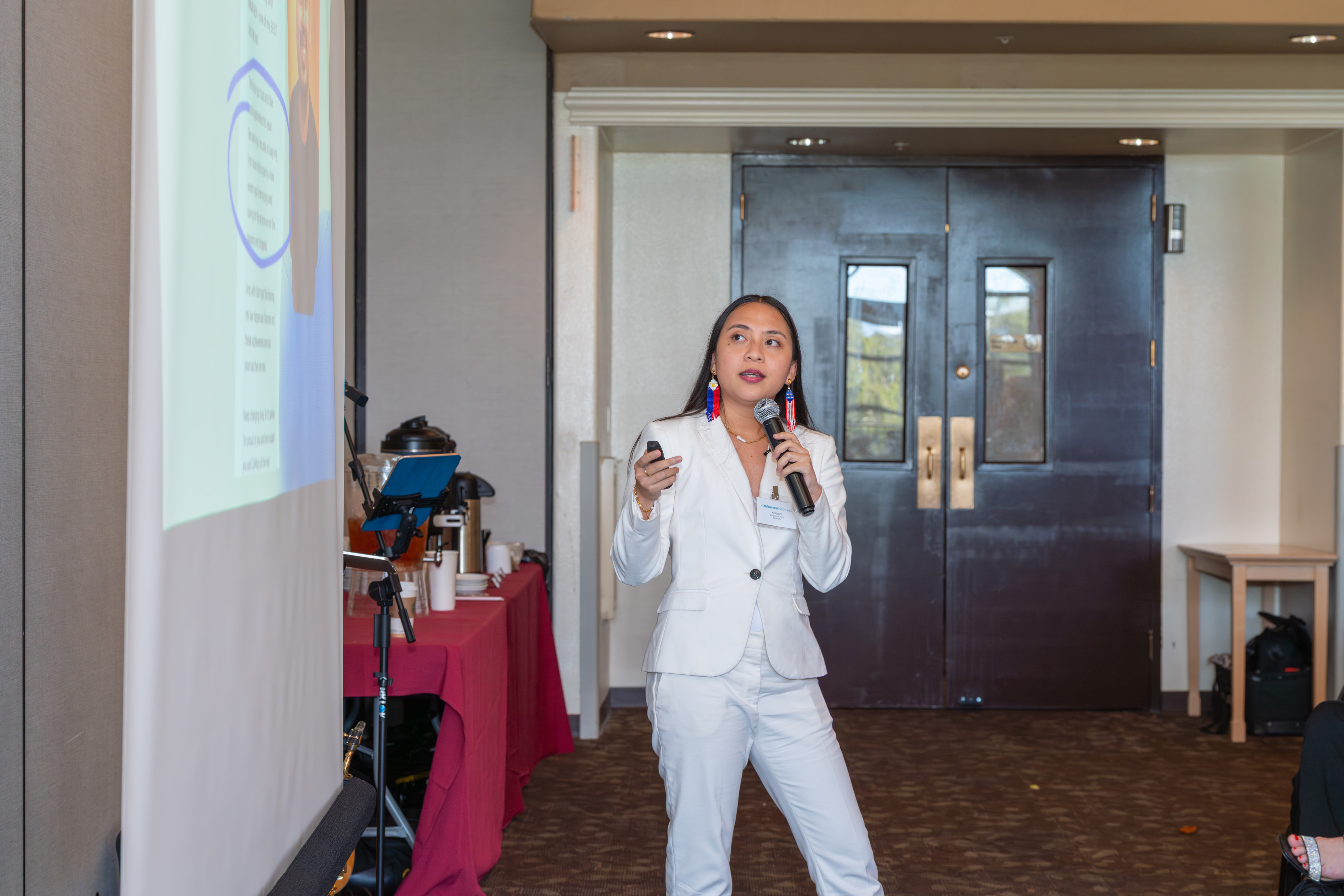
Khryzza Kelley
Chief Team Architect · CoWorq
Khryzza Kelley, Chief Team Architect at CoWorq
Who designed this
Every business thinks they have a people problem. They don't. They have a design problem. Your team isn't underperforming because you hired wrong — no one architected it.
Khryzza Kelley
Chief Team Architect · CoWorq
More about Khryzza
Who this is for

Architecting, not hiring.

The reliable tell: can you name a specific milestone 12–18 months out? If yes, you're ready for this. If you can only name a current gap, start with a Seat Design Call instead — and scale up here later.

A fit if…
✓ You can name a 12–18 month target with a number and a date
✓ You're service-based and past roughly $500K
✓ You have people but no clear lanes or scoreboards
✓ You've hired to fix a problem and it didn't fix it
✓ You want the org chart before the job post
Not yet if…
— You need one specific role filled this month
— You're pre-revenue or still testing the offer
— You want a resume, not a redesign
— You're looking for the cheapest possible labour
The first three are a Hire with CoWorq conversation. The last one isn't us at all — we don't compete on cheap.
Not by accident. By design.

Bring the target. We'll design the team that reaches it.

Ninety minutes, $1,249. Pick a time below — you leave with your stage, your Bandwidth Gap, the target org chart, and the order to build it in.

[email protected] · +1 909 242 8876 · Only need one seat filled? Hire with CoWorq
Still deciding?

Talk it through first. Thirty minutes, free.

A discovery call with CoWorq — no deck, no pressure. Describe where the team is stuck and we'll tell you honestly whether a Team Architecture Session is the right next move, whether a single Seat Design Call would serve you better, or whether the timing simply isn't right yet.

✓ 30 minutes · free · no obligation
✓ An honest read on your stage
✓ Ask about scope, pricing, timelines
FAQ

Common questions.

Anything else, ask it live — the session is a working conversation, not a presentation.
We map your current structure live, locate your stage and Bandwidth Gap, then design the target org chart layer by layer — leadership first. The last stretch is sequencing: which seat to fill first, what it costs, and what it unlocks. You leave with the charts and seat definitions.
The chart is the artifact, not the product. Each seat comes with one owner, one outcome, and a scorecard, plus a hiring order tied to your revenue target. And unlike a consultancy, we can deploy against it — that's phases three and four.
No. Plenty of clients build the design with people they already have, or hire locally. We'll tell you honestly which seats we can fill well and which you're better off hiring in-market.
A coach works on you. A fractional COO occupies a seat. Team Architecture designs the structure itself — including whether that COO seat should exist, what it owns, and what it makes possible below it.
The distance between the work your business now generates and the capacity that was actually designed to absorb it. Growth widens it silently, and it always lands on whoever is least protected — usually the founder. Naming it is how you decide what to design next instead of hiring reactively.
Biannually while you're growing, and any time the target moves materially. A structure designed for one volume breaks at double it — architecture is versioned, not finished.
No — small teams are the cheapest place to fix structure, because you're designing rather than rearranging. What matters is whether you can name a 12–18 month milestone. If you can't yet, start with a Seat Design Call.
Yes — book the free 30-minute discovery call. It's a conversation, not a pitch. Describe where the team is stuck and we'll give you an honest read on your stage and whether a session is the right next move.
That happens, and we'll say so. Sometimes the answer is redefining two seats rather than adding a third. The session pays for itself faster when it stops a hire you didn't need.
Not by accident. By design.

A Team Architecture Company. We design, deploy, and manage the team your business needs to scale.

© 2026 CoWorq · US Office: Tulsa, OK · PH Office: Davao City